
A minimalist skincare routine sounds cleaner than it feels in real life.
Quick Answer
A minimalist skincare routine that keeps the useful jobs, removes clutter, protects sunscreen use, and adds treatments only when they have a clear reason.
Real life is a half-used moisturizer, a sunscreen that pills only on rushed mornings, one serum you bought because everyone talked about it, and a cleanser that was fine until winter. So no, I would not treat minimalism like a strict product count. Three products can be too many if two of them irritate you. Five products can be reasonable if each one has a boring, useful job.

The Shelf Test
Put the current routine in front of you and ask a slightly rude question: what would happen if this step disappeared for two weeks?
If the answer is “probably nothing,” that step is a candidate for the pause pile. If the answer is “my skin gets tight” or “my sunscreen looks worse” or “my acne treatment becomes unbearable,” keep it. Minimalism is not about owning the fewest bottles. It is about removing the steps that do not earn their rent.
I would start with a base that can survive normal days: cleanser when needed, moisturizer when needed, sunscreen when skin is exposed. That is not a slogan. It is just the three jobs that tend to matter most.
Where People Make It Too Small
The most common mistake is removing comfort. Someone cuts the routine down, skips moisturizer, uses a drying sunscreen, and then decides minimalist skincare is not for them. Maybe it was not minimalism that failed. Maybe the routine was missing support.
Dry cheeks do not care that you are trying to be streamlined. A face that wears water-resistant sunscreen does not care that double cleansing feels less minimalist. If one cleanse leaves residue and two gentle steps work better, use the two steps.
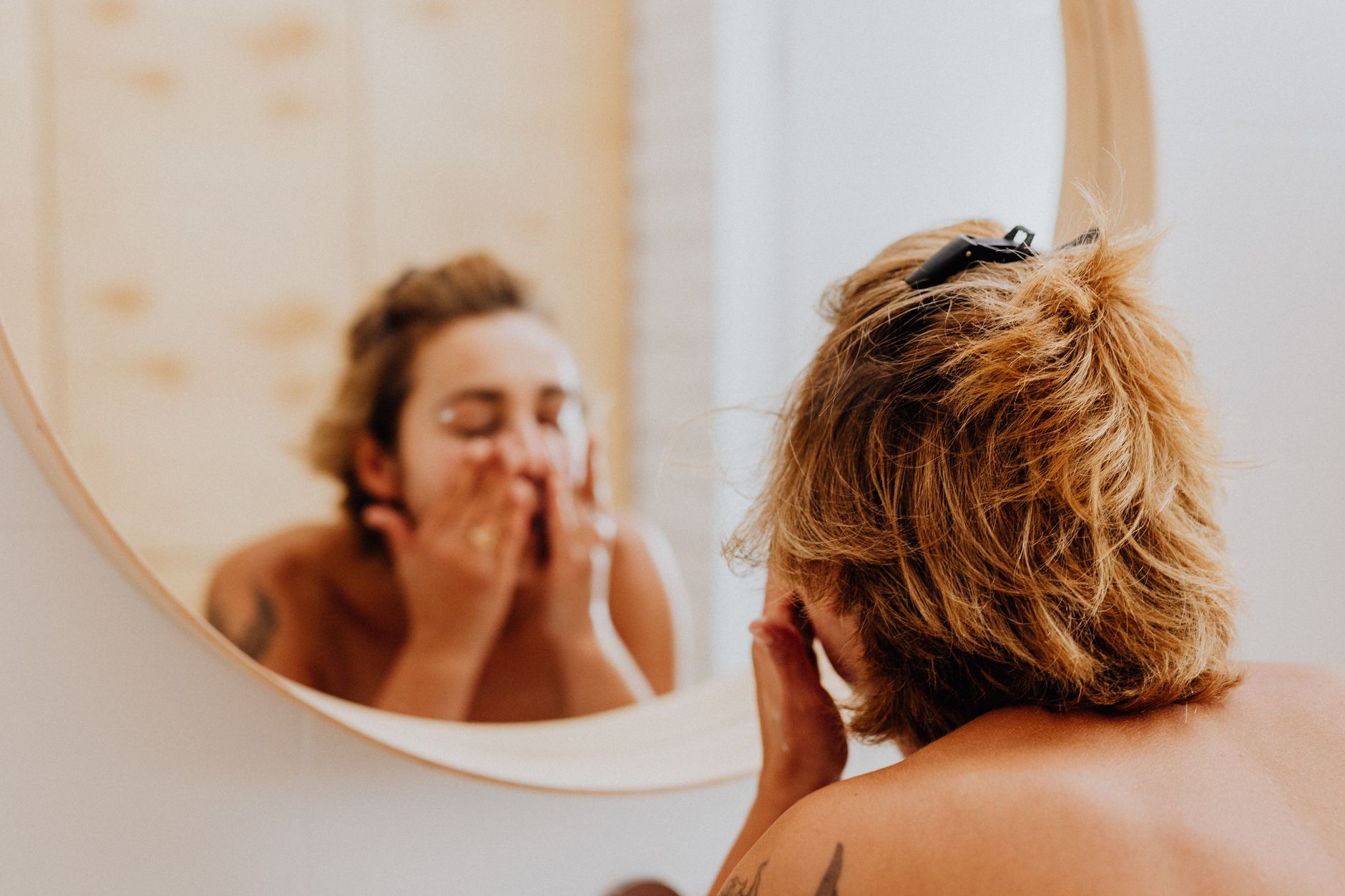
Cleanser Notes
I would be suspicious of any cleanser that makes the skin feel squeaky. That feeling can seem clean for about five minutes, then the moisturizer has to rescue the situation.
Morning cleansing is negotiable. Night cleansing is less negotiable if sunscreen, makeup, sweat, or city grime is on the skin. Use the amount of cleansing the day requires. That is a more useful rule than “always cleanse twice” or “never cleanse in the morning.”
One small detail: if the skin gets tight only after washing, do not go shopping for a more advanced serum first. Fix the wash.
Moisturizer Notes
Minimalist does not mean using a moisturizer so light that your face spends the afternoon asking for help. A single moisturizer can be enough, but it has to be the right single moisturizer for the season, sunscreen, and skin mood.
Use uneven amounts. More on cheeks. Less where you get shiny. A tiny amount of ointment on cracked corners if needed. This is not breaking the minimalist rule. This is paying attention.
Sunscreen Is The Annoying Boss
Daytime routines answer to sunscreen. If the layers underneath make sunscreen pill, simplify underneath. If sunscreen dries you out, add moisture underneath. If sunscreen stings daily, look for a different sunscreen instead of building a complicated cushion around a product your face dislikes.
A sunscreen that only works as a tiny dab is not your daily sunscreen. It is a sample of sunscreen behavior.
The Pause Pile
I would pause the products with unclear jobs first: decorative toner, duplicate hydrating serum, mask used out of guilt, exfoliant that keeps making the skin shiny-tight, serum kept only because it was expensive.
Do not throw them away while annoyed. Just stop using them. Put them somewhere boring. After two or three calmer weeks, you can re-test one product if there is a reason. Sometimes the reason never appears. That is useful information too.
One exception: do not pause medication or a clinician-directed treatment casually. Minimalist skincare is not a reason to ignore medical advice. It is a way to reduce the extra noise around the products that genuinely matter.
Treatments Can Stay, But They Need Boundaries
A minimalist routine can include a retinoid, acne treatment, exfoliant, or pigment-focused product. The difference is that the treatment does not take over the whole bathroom.
Give it a schedule. Give it recovery nights. Do not add a second treatment because the first one has not worked in four days. Skin is slow, and irritated skin is even slower.
If a treatment is prescribed, follow your clinician’s directions. The minimalist part is the support routine around it: gentle cleanse, moisturizer, sunscreen, and fewer extra experiments.
A Two-Week Reset
For two weeks, keep the base steady. No new serum. No random mask. No “just once” peel pad because the mirror was rude that morning.
At the end, ask what still needs help. Acne? Dryness? Pigment? Sunscreen comfort? Pick one. The next product should answer that one problem, not make the routine look more complete.
If the routine already feels comfortable after the reset, you do not have to graduate to a bigger routine. Staying there is allowed. A calm, repeatable shelf is a better result than a complicated shelf you keep negotiating with.
Useful Next Reads
For reactive skin, pair this with the sensitive skin routine guide. If the current shelf is overloaded, read how to simplify your skincare routine.
Bottom Line
A minimalist skincare routine should make the skin easier to understand. Keep the useful jobs, remove the decorative steps, protect sunscreen use, and add treatments only when they have a clear reason.
Medical note: ask a dermatologist about persistent burning, rash, acne that worsens, eczema, rosacea flares, or reactions that keep returning.
Sources
Disclaimer
This article is for educational purposes only and is not medical advice. If you have severe irritation, eczema, rosacea, acne, allergies, or a persistent skin condition, consult a dermatologist before changing your skincare routine.